
blog
Technological Innovations in Iran’s Plastics Industry

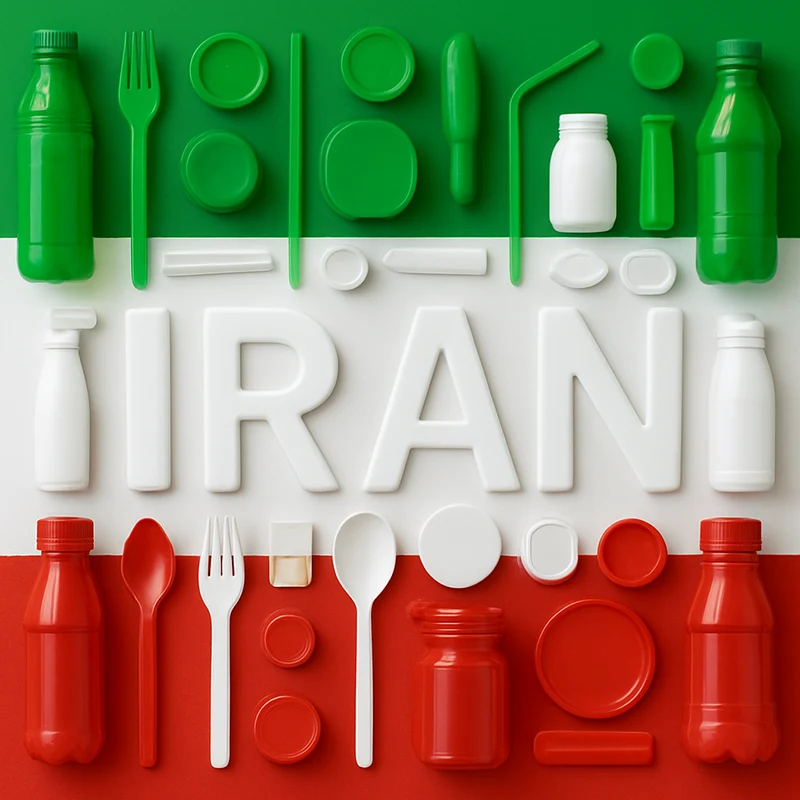
The Iranian plastics industry is undergoing a transformation with accelerating technological innovations, from artificial intelligence to advanced materials such as nanocomposites and biodegradable polymers. These advancements not only improve the quality and efficiency of plastic products, like single-use containers, but also enhance the industry’s competitiveness in domestic and international markets by focusing on environmental sustainability and reducing production costs. In Iran, companies like Tab Plastic and Zarplast are leaders in the production of single-use and smart containers, utilizing modern technologies. While challenges such as high raw material costs and the need for advanced recycling infrastructure still exist, export opportunities to countries like Iraq and Turkey, along with a growing demand for eco-friendly products, paint a bright future for this sector. The following sections discuss key topics related to innovation and technology in the plastics industry:
- The use of artificial intelligence in quality control of plastic container production lines
- Smart containers with color-changing capabilities when in contact with hot food
- Development of plastic containers with antibacterial and antimicrobial properties
- Application of conductive plastics in electronics industry packaging
- 3D printing of plastic injection molds: Reducing cost and production time
- Biodegradable plastics: Production technologies and challenges
- Polymer nanocomposites and the improvement of mechanical properties of plastic containers
- Smart packaging with the ability to indicate food freshness
- Advanced recycling technologies for multi-layer plastics
- Self-cleaning plastic containers (hydrophobic and stain-resistant surfaces)
- The use of shape memory polymers in the production of plastic containers
- Technologies for reducing the thickness of plastic containers while maintaining strength
The Use of Artificial Intelligence in Quality Control of Plastic Container Production Lines
Artificial Intelligence (AI) plays a prominent role in increasing the quality and efficiency of plastic container production. Through machine learning algorithms and computer vision, surface defects such as hairline cracks, warping, or molding irregularities are quickly identified, reducing production waste by up to 15-20%. In Iran, companies like Khoydak Plastic use this technology for precise control of temperature, pressure, and cooling time, which leads to the production of high-quality containers that comply with health standards. AI also analyzes past data to predict the optimal maintenance time for machinery, detect potential malfunctions, and prevent sudden stoppages. This not only reduces repair costs but also contributes to an increase in overall efficiency, a decrease in energy consumption, and a reduction in environmental impact.
Smart Containers with Color-Changing Capabilities When in Contact with Hot Food
Smart plastic containers, using innovative materials such as thermochromic polymers, allow consumers to identify the food’s temperature. These polymers react to heat with a light-based reaction and, by changing color, display the current temperature of the contents. This feature is particularly useful for delivery services, fast food, and hot restaurant meals, as it warns the consumer that the food is still hot or at a suitable temperature for consumption. Such technologies, in addition to increasing food safety, also help build customer trust and satisfaction.
In Iran, the technology for thermochromic smart containers is still in the research and development phase but has great potential for growth, especially in the field of export packaging to neighboring countries like Iraq, where there is a growing demand for innovative and hygienic solutions. Domestic manufacturers, by focusing on enhancing the visual quality of these containers, use attractive designs and dynamic color schemes to improve the user experience and attract the attention of foreign buyers. This visual appeal is not only an effective marketing tool but, when combined with functional features like a temperature indicator, can strengthen the competitive advantage of Iranian brands in the global market.
.
Development of Plastic Containers with Antibacterial and Antimicrobial Properties
Antibacterial plastic containers are designed using nanotechnology and active particles such as silver, zinc oxide, or copper to prevent the growth and multiplication of pathogens on the container surface. These nanoparticles disrupt the biological processes of bacteria, playing a protective role against food contamination and thereby increasing consumer food safety. These containers are considered a reliable option, especially for packaging sensitive food items like dairy products, meat, and ready-to-eat meals, and are produced in foam, PET, or other thermoplastic forms.
In Iran, some companies have also taken important steps to improve health standards by using the technology to produce antibacterial containers. In addition to their use in the food industry, these products are also used in hospitals, medical centers, and pharmaceutical packaging. One of the significant advantages of this technology is the extension of food shelf life by up to three to four times, which helps reduce food waste and cold storage costs. However, high production costs, the complexity of sourcing special raw materials, and the need for international health certifications are still among the challenges for the widespread development of this type of container.
Application of Conductive Plastics in Electronics Industry Packaging
Conductive plastics, by using additives such as carbon black, graphene, carbon nanotubes, or metal nanoparticles, acquire anti-static properties. These materials facilitate the conduction of electrical charges at a molecular level and prevent electrostatic discharge (ESD), which can cause serious damage to sensitive equipment. The use of these plastics in packaging delicate electronic components like chips, memory cards, and printed circuit boards is becoming more widespread, as in addition to electrical protection, they are lightweight, flexible, and easy to mold.
In Iran, this technology is also growing in the electronics and packaging industries. Some packaging companies operating in the industrial cities of Alborz, Tehran, and Isfahan are meeting the needs of the domestic market by using conductive polyethylene or polypropylene and are seeking international certifications to enter export markets. These packages are usually in the form of sheets, foams, or molded containers and can also be developed for the medical, aerospace, and telecommunications equipment sectors. Their economic advantages over metal and glass packaging include lower cost, recyclability, and reduced transportation expenses, making them suitable alternatives in the modern packaging industry.
3D Printing of Plastic Injection Molds: Reducing Cost and Production Time
3D printing technology has created a major revolution in the design and manufacturing of plastic injection molds. Using industrial 3D printers, manufacturers can create complex molds with precise details without the need for lengthy machining or traditional manufacturing. This process not only reduces mold production time by up to 50% but also significantly lowers the costs associated with raw materials, labor, and tooling. In the production of plastic containers, 3D printing is widely used especially for making prototypes, as it allows for design modifications and performance testing in a short amount of time.
In Iran, many companies active in the packaging and molding sectors are using this technology for the rapid development of new models. By printing molds made of durable resin or composite materials, manufacturers have been able to produce customized designs on a small scale and at affordable prices, without the need for large investments in permanent steel or aluminum molds. This design flexibility allows brands to respond more quickly to market needs and offer a wide variety of designs for beverage, pharmaceutical, or food containers.
Additionally, 3D printing has enabled Iranian designers to test the performance of molds under real conditions before moving to mass production and to quickly correct flaws. This has reduced the risk of failure for industrial projects and made the product development process shorter and less costly.
Biodegradable Plastics: Production Technologies and Challenges
Biodegradable plastics, such as polylactic acid (PLA), polyhydroxyalkanoate (PHA), and starch-based biopolymers, are used as sustainable alternatives to traditional plastics in the production of plant-based single-use containers. These materials have the ability to decompose under specific conditions, including temperature, humidity, and the presence of active microorganisms, and after use, they convert in the environment to carbon dioxide, water, and simple organic matter. The use of these materials significantly helps reduce plastic pollution and conserve natural resources, especially in industries such as food, beverage, and pharmaceutical packaging, which have high levels of plastic waste.
In Iran, companies such as Zarplast, Nano Baspar Tehran, and Zist Polymer Pardis are responding to the growing demand for sustainable products by producing PLA- and cornstarch-based containers. These containers have been well-received not only in the domestic market but also in exports to eco-friendly countries like Germany, the Netherlands, and the Persian Gulf countries. However, challenges such as high production costs, the sensitivity of these materials to high temperatures, and the need for biological waste management infrastructure have hindered the rapid development of this technology.
On the other hand, efforts have begun to improve the properties of bioplastics, including increasing their thermal and mechanical resistance, controlled decomposition rate, and compatibility with thermoforming equipment. Also, government support and environmental incentives, such as tax reductions on green production, can pave the way for the development of this industry in Iran and drive domestic producers to compete in the global market.
Polymer Nanocomposites and the Improvement of Mechanical Properties of Plastic Containers
Polymer nanocomposites are considered one of the most innovative compounds in the packaging industry, using nanoparticles (such as nanoclay, graphene, titanium dioxide, or active silica) to significantly improve the mechanical and thermal properties of plastics. Due to their very small size and high active surface area, these nanoparticles are well-distributed in the polymer matrix and increase tensile strength, stiffness, thermal stability, and reduce the permeability to gases such as oxygen and water vapor. These properties make containers made from nanocomposites a suitable option for packaging sensitive food items, pharmaceutical products, and cosmetics.
In Iran, this technology is mainly developing in the food packaging sector, and companies such as Nanobaspar Industries and several other enterprises operating in the industrial cities of Tehran and Qazvin have begun to produce injection-molded and thermoformed containers with advanced nanopolymers. The use of modified clay and functionalized graphene in polypropylene and lightweight polyethylene has resulted in final products that, while having a lower weight, have higher resistance and a longer shelf life. These containers have found applications in packaging dairy products, juices, protein substances, and even energy drinks.
However, the development of this technology is accompanied by challenges, including the high cost of supplying specialized nanoparticles, the complexity of the uniform dispersion process, and the need for special equipment for processing nanomaterials. Additionally, standardization and safety certifications for use in contact with food have not yet been fully completed in some cases, which slows down the speed of commercialization. But the future outlook, with support for domestic production of nanoparticles and research collaborations between universities and industries, is moving towards increased utilization in the domestic and export markets.
Smart Packaging with the Ability to Indicate Food Freshness
Smart packaging is a new generation of food safety technologies that, by using nanosensors and chemical and biological indicators, monitor the freshness and health status of a product in real-time. These packages are usually designed in the form of labels or embedded coatings that, by changing color, emitting a light signal, or through reactive indicators, warn the consumer that the product is on the verge of spoilage or is not suitable for consumption. Freshness indicators can interact with gases released from food, such as ammonia or sulfides, to change their color, making the product’s status clearly visible.
In Iran, this technology is particularly growing in the packaging sector for dairy products, fresh meat, and seafood, and some companies that produce packaging materials have, in collaboration with research centers, offered preliminary prototypes of these systems. In addition to providing warnings, these packages sometimes use active preservatives, such as antioxidant or antimicrobial compounds, that, when released in a controlled manner in the event of spoilage, extend the product’s useful life by several days. The use of this type of packaging in export industries, especially for sensitive products and cold chains, can play an effective role in reducing waste, maintaining quality, and increasing customer trust.
Despite the numerous advantages, obstacles such as high production costs, the need for precise calibration of chemical sensors, and the challenges of consumer safety certification are among the reasons for the delayed widespread adoption of this technology. However, increased public awareness, government support for green production, and the food industry’s need for safe innovations promise a bright future for the development of smart packaging in Iran.
Advanced Recycling Technologies for Multi-layer Plastics
The recycling of multi-layer plastics, which are commonly used in complex food packaging, faces significant technical and environmental challenges. This type of plastic is composed of different material layers, such as polyethylene, polypropylene, polyamide, and aluminum, making their separation very difficult with traditional mechanical methods. New technologies such as chemical recycling, solvolysis, and pyrolysis have been developed to molecularly break down these compounds to produce high-quality raw materials from complex waste. These processes can convert heterogeneous layers into basic components, such as monomers or industrial fuels, and provide for their reuse cycle without a significant loss in material quality.
In Iran, the recycling of multi-layer plastics is still in the research and semi-industrial stages, but a new approach by some companies active in the recycling and polymer sectors indicates a move towards utilizing chemical recycling. By investing in thermal and catalytic decomposition equipment, it is possible to convert polymer waste into usable petroleum products or petrochemical feedstock. This trend not only helps reduce the burden of plastic waste on the environment but also decreases energy consumption compared to traditional production and enhances the sustainability of manufacturing processes. Furthermore, the growing global demand for recycled polymers and environmental export requirements have created an incentive for the faster development of this technology in Iran.
Self-Cleaning Plastic Containers (Hydrophobic and Stain-Resistant Surfaces)
Nanoparticle-based self-cleaning containers are among the advanced innovations in the plastics industry that, by using superhydrophobic coatings, prevent grease, dirt, and microbial particles from sticking to the container surface. These coatings are typically made from silica nanomaterials, fluorine, or engineered polymers that increase the contact angle of liquid droplets with the surface to the extent that the droplet easily slides off the container and cleans the contamination with it. The application of this technology is especially important in sensitive environments such as hospitals, medical centers, and the packaging of food with a high risk of contamination, as it reduces the need for washing and improves sanitary safety. Additionally, these containers maintain the hygienic stability of the product during long-term transportation and storage and perform well in the packaging of medicines, baby food, and dairy products.
In Iran, this technology is being developed by some single-use container manufacturing companies in collaboration with research universities. Experimental products using nanocoatings have been introduced in hospital, laboratory, and pharmaceutical packaging, but due to the high cost of nanomaterials, the complex coating process, and the need for food safety certifications, their widespread use is still limited. However, the growing trend of exporting containers to countries in the Persian Gulf and Central Asia, which have a higher demand for hygienic products, has created a suitable opportunity for the development of this technology in the country. Also, government support for clean production and investments in industrial nanotechnologies can facilitate the path to mass and economic production of self-cleaning containers in the future.
The Use of Shape Memory Polymers in the Production of Plastic Containers
Shape Memory Polymers (SMPs) are a type of smart material that, after a specific stimulus such as temperature, light, or moisture is applied, can return to their original shape or take on a new one. This behavior is a result of the unique molecular structure of these polymers, which is activated under specific conditions and causes a controlled shape change. In the packaging industry, the use of SMPs allows for the design of containers that can open at a specific temperature, alert the consumer, or even occupy less space during transportation. In the medical field, these polymers have also found application in the production of pharmaceutical containers with secure locks, temperature-sensitive syringes, or dynamic protective coatings that exhibit a specific function in response to changes in environmental conditions.
In Iran, companies active in the polymer and nanotechnology sectors, in collaboration with research centers, are exploring the manufacturing of smart containers using SMPs. These products are being tested and developed for specific industries, such as pharmaceutical packaging, pasteurized products, or even export packaging for heat-sensitive materials. Despite the high potential, limitations such as the complexity of the formulations, the need for precise molding equipment, and the high cost of raw materials have slowed down the commercialization process. However, the high innovative potential allows for the combination of SMPs with other smart technologies, such as thermal indicators or antibacterial coatings, which paves a new path for the production of smart containers in Iran.
Technologies for Reducing the Thickness of Plastic Containers While Maintaining Strength
New plastic injection technologies, including High-Speed machines from Izumi, play a very effective role in optimizing the design and production of thin-walled containers. These machines, with a fast injection system and controlled pressure, allow for the precise molding of polypropylene or polyethylene with a thickness up to 30% less than conventional samples, without compromising the product’s strength or uniformity. In the production of food packaging containers, this feature leads to increased transparency, reduced production time, and lower raw material consumption, which collectively enhances economic efficiency and technical performance. The high speed of these machines and the precision in controlling temperature and pressure have resulted in products that are not only more delicate and lightweight but also more resistant to cracking, impact, or leakage.
In Iran, manufacturers active in the packaging sector, especially in the industrial cities of Tehran, Alborz, and Isfahan, have been able to significantly reduce energy costs, material waste, and production line setup time by introducing this technology. The use of multi-cavity molds with rapid cooling has enabled mass production in a short time, which is a great advantage in the competitive domestic and export markets. Furthermore, the reduction in the weight of plastic containers has led to a decrease in plastic consumption per production unit, which, in addition to conserving resources, minimizes the environmental impact of the production process. This technological transformation has paved the way for sustainable development in Iran’s packaging industry and created new opportunities for creative and economical design in the plastic container market.